
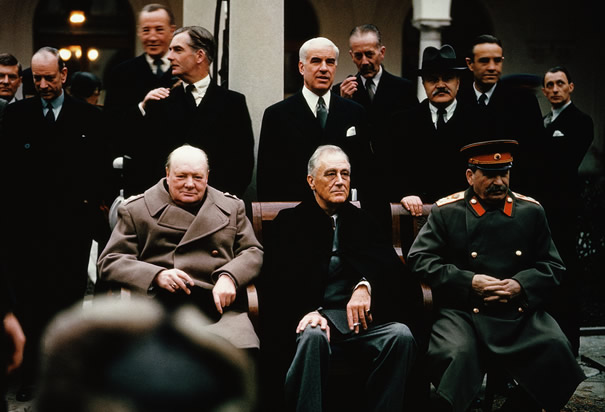
Winston Churchill once said that “democracy is the worst form of government, except for all the others.” I think he was right. We complain about government as a matter of habit, but the beauty of democracy is that it enables us to do so! The reality is that a stable political system – an attribute that contemporary democracy possesses in spades – allows the youth to have some say in their lives and choice of ideology. We no longer live with the exploitative factory labour model of the industrial revolution that infuriated Marx. Children – in the first world at least – are no longer forced to slave in dangerous factories, sweatshops and mines. Instead, they go to school, learn about the world, have creativity and imagination fostered, and are taught, crucially, that they possess the power to change the world. And I fully believe they do. Though we have a tendency to glorify the past, the reality is that few of us would truly want to live during the religious warfare of the Crusades, the horror of the black death, the myriad of revolutions and wars that were near constant in eighteenth-century Europe, or the unparalleled wars and, later, the nearly world-ending paranoia of the twentieth century. All of those horrendous events have been stepping-stones to the present day – and the men and women who drove the West to the state of peace that it currently enjoys were all once youth, people who saw the folly of their forefathers and sought to change it for the better.
Youth should be a time of creativity, of imagination, of learning, of adventure, of relative physical freedom and unparalleled mental freedom. In Australia, we live with a political system that allows that. Elsewhere on the globe, youth are not so lucky. Perhaps the most horrific alternative can be seen in Sierra Leone. From 1991 to 2002, the rebel armies of the Revolutionary United Front (RUF) forcibly, and regularly, recruited boys between the ages of 7 and 12 to serve as soldiers, while girls of the same age were forced into prostitution. The boys were often forced to murder their own parents as initiation into the RUF. Though the RUF has since been officially disbanded, their legacy endures; tens of thousands of youth who were either the perpetrators or victims of atrocities can never, ever reclaim their innocence. Those are youth who are the victims of, in grossly understated terms, an unstable political system. Of course, it has to be remembered that there are plenty of disadvantaged, abused and neglected children in our own society – but here, at least, there are organisations that stand by to help. The victims of civil wars and human atrocities in the third world have no government-backed help standing by. They have no support networks to speak of.
So then. Perhaps asking why the youth should care about politics is the wrong question. Perhaps we should be happy to conclude that the youth of today live in a world where they don't need to worry about politics - at least while they are still youth. When our society deems the time has come for the youth to pick up the weight of worldly responsibilities they are no longer truly youth, but young adults, and are equipped with the imagination and drive to see things that need improvement in society and can go about fixing them. Unlike the youth of Sierra Leone and countless other third-world countries, they are not political victims with no choice but to attempt to pick up the broken pieces of the world into which they were born.
Maybe you believe that the youth should care about more politics more than they do. A case certainly exists for that, and a healthy interest in politics is never a bad thing. But at the end of the day, I think if the youth have to worry about politics... that is when there is a problem.
Read more by Solomon
